- Home
-
India Insights and Market vault

The Scottish-American economist has devoted his career to investigating the connections between wealth and wellbeing.
Does money buy happiness?
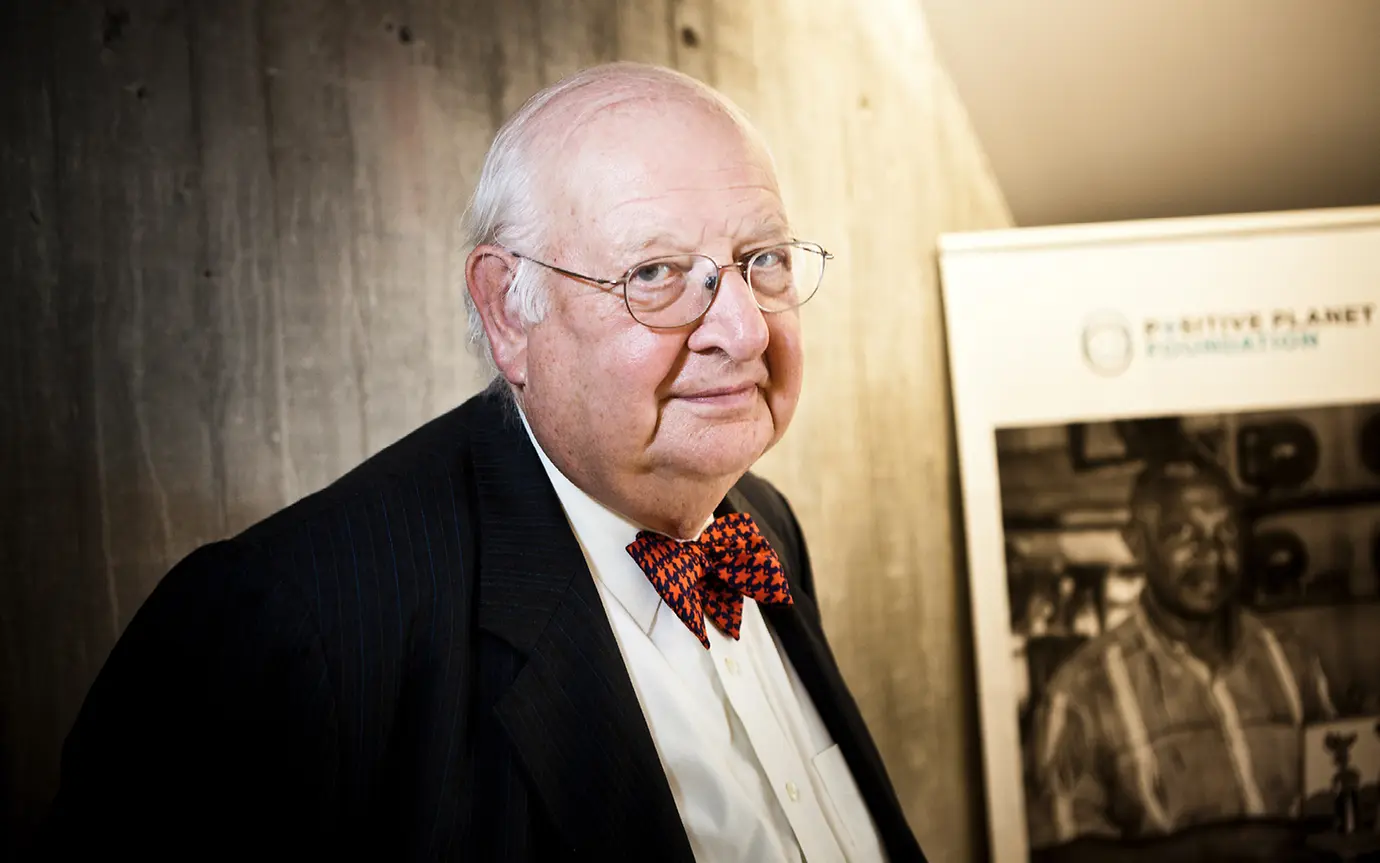
This age-old question has exercised Angus Deaton more than most economists. Indeed, in research spanning many decades, his contribution to the debate has helped to both shape and redefine it.
Deaton's concern with "the poor of the world, how people behave and what gives them a good life" led him to focus his research on the consumption of goods and services and how this relates to poverty and human welfare.
Even happiness has a spending limit.
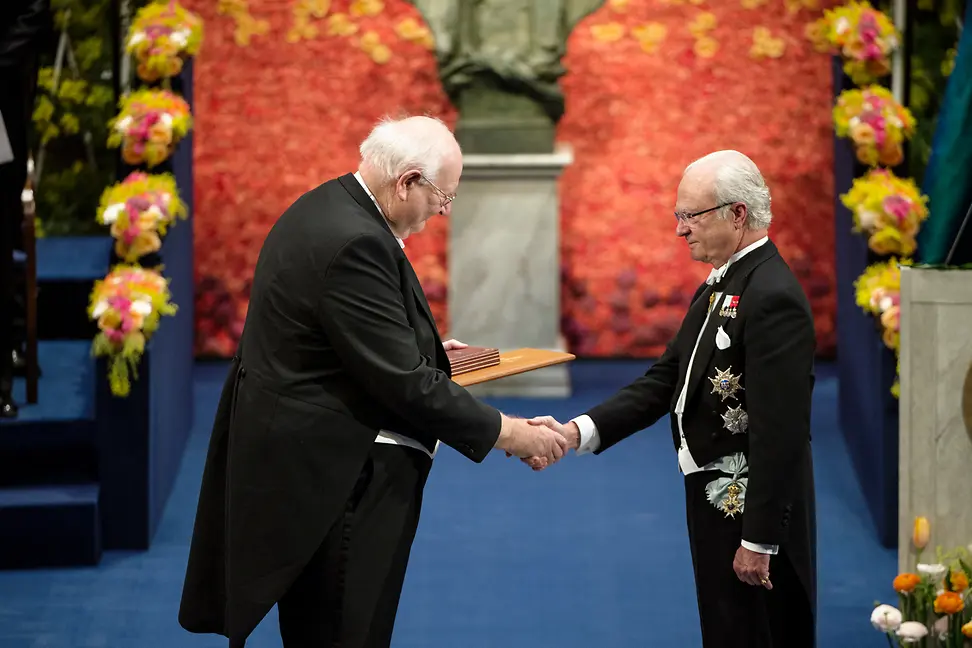
In 2015, his endeavours were rewarded with a Nobel prize that specifically recognised his insights into the relationship between individual consumption decisions and outcomes for the economy as a whole.
The Nobel committee observed that by "untangling the patterns we see in aggregate data," Deaton's empirical approach had helped to transform macroeconomics.
The committee also cited Deaton's pioneering use of household survey data to shed light on issues such as the relationship between income and calorie intake, and the extent of gender discrimination within the family, especially in developing countries.
Deaton's research, they stated, had helped to turn development economics into "a field dominated by empirical research based on high-quality micro data".
Deaton's work is rigorously data-driven.
Born in Edinburgh, Scotland, in 1945, he credits his self-educated father with having awakened his early interest in mathematics, and ensuring he had the best possible educational opportunities.
Deaton received his doctorate in economics (to which he'd switched from mathematics) from Cambridge University with a thesis titled "Models of Consumer Demand and their Application to the UK" in 1975.
His thesis adviser was Richard Stone, who had won a Nobel prize for developing an accounting model designed to track economic activities, hence his reputation as "the father of national income accounting".
In 1976 Deaton became Professor of Econometrics at Bristol University in the UK, and over the next decade he began to make his academic mark with a series of contributions to economic demand modelling.
The most significant was the consumer demand model known as the Almost Ideal Demand System (AIDS), which he developed with the economist John Muellbauer and published in The American Economic Review (AER) in 1980.
Their paper, which described a flexible and relatively simple way for economists to analyse consumer behaviour by modelling demand, was named one of the top 20 published works of the AER's first 100 years.
The relevance of Deaton's work to the wider public debate on wealth and wellbeing also brought popular recognition, especially in the USA, his adopted country.
In 2010, in collaboration with the late Daniel Kahneman, another Nobel laureate, he conducted research that sought to determine the extent to which wellbeing improves with income.
Their findings, which attracted widespread media attention, showed that in the USA rising income did indeed increase people's wellbeing, but only up to a ceiling of USD 75,000. Life satisfaction, however, continued to rise.
Science shows: poverty sucks.
Not surprisingly, given public interest in the topic, Deaton and Kahneman's research prompted a lively discussion.
The Wharton School's Matthew Killingsworth subsequently challenged their findings with a study suggesting that the income plateau for wellbeing is limited to the least happy segment of the population.
This intervention resulted in a fresh collaborative investigation between Killingsworth and Kahneman, which concluded that for the average person (but not the most unhappy) both happiness and life satisfaction tend to rise with income.
Deaton later quoted the Gawker.com summary of these results: "Science shows poverty sucks," in his Nobel autobiography.

Deaton's penchant for pithy aphorisms also enlivened later research, conducted with his wife and fellow economist Anne Case, into the causes of rising mortality among white middle-aged Americans - a trend unique in developed countries.
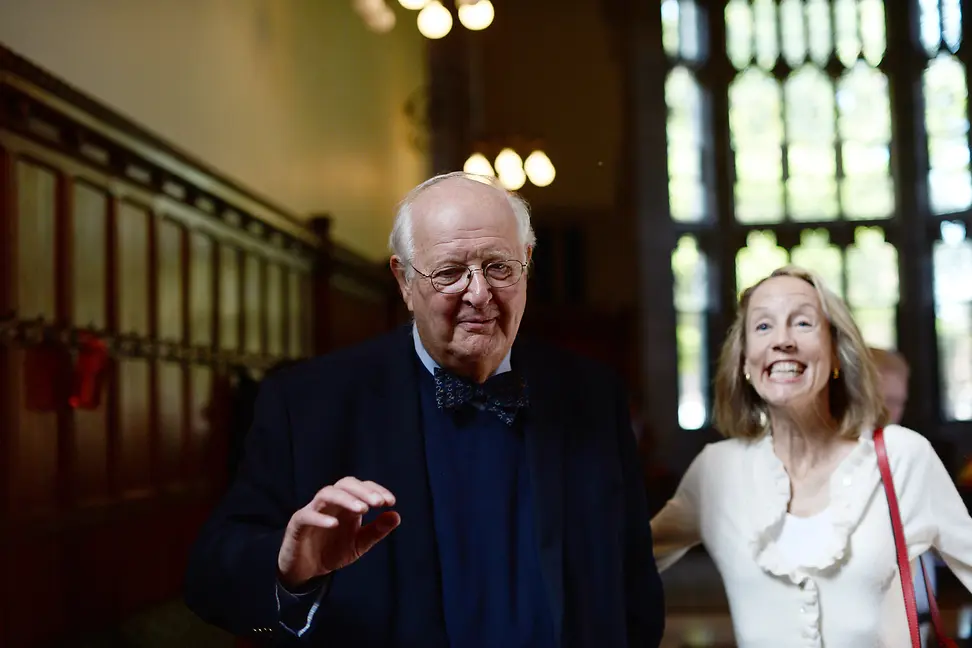
Their findings, which appeared in book form as "Deaths of Despair and the Future of Capitalism" in 2020, resonated with the public during the US opioid crisis. And Deaton, sporting his trademark bow ties, became a familiar commentator on the crisis and its causes in the media.
He and Case attributed these "deaths of despair" to drug and alcohol poisoning, suicide, and chronic liver disease and cirrhosis. They noted that morbidity rates were rising too, especially "self-reported declines in health, mental health…and inability to work."
In a subsequent, federally funded investigation the couple also highlighted worsening labour market opportunities as a key cause of poor life outcomes, especially for uneducated white non-Hispanics.
Deaton also looked beyond the USA, turning the spotlight on poverty and inequality in developing countries, and especially on the limitations of foreign aid.
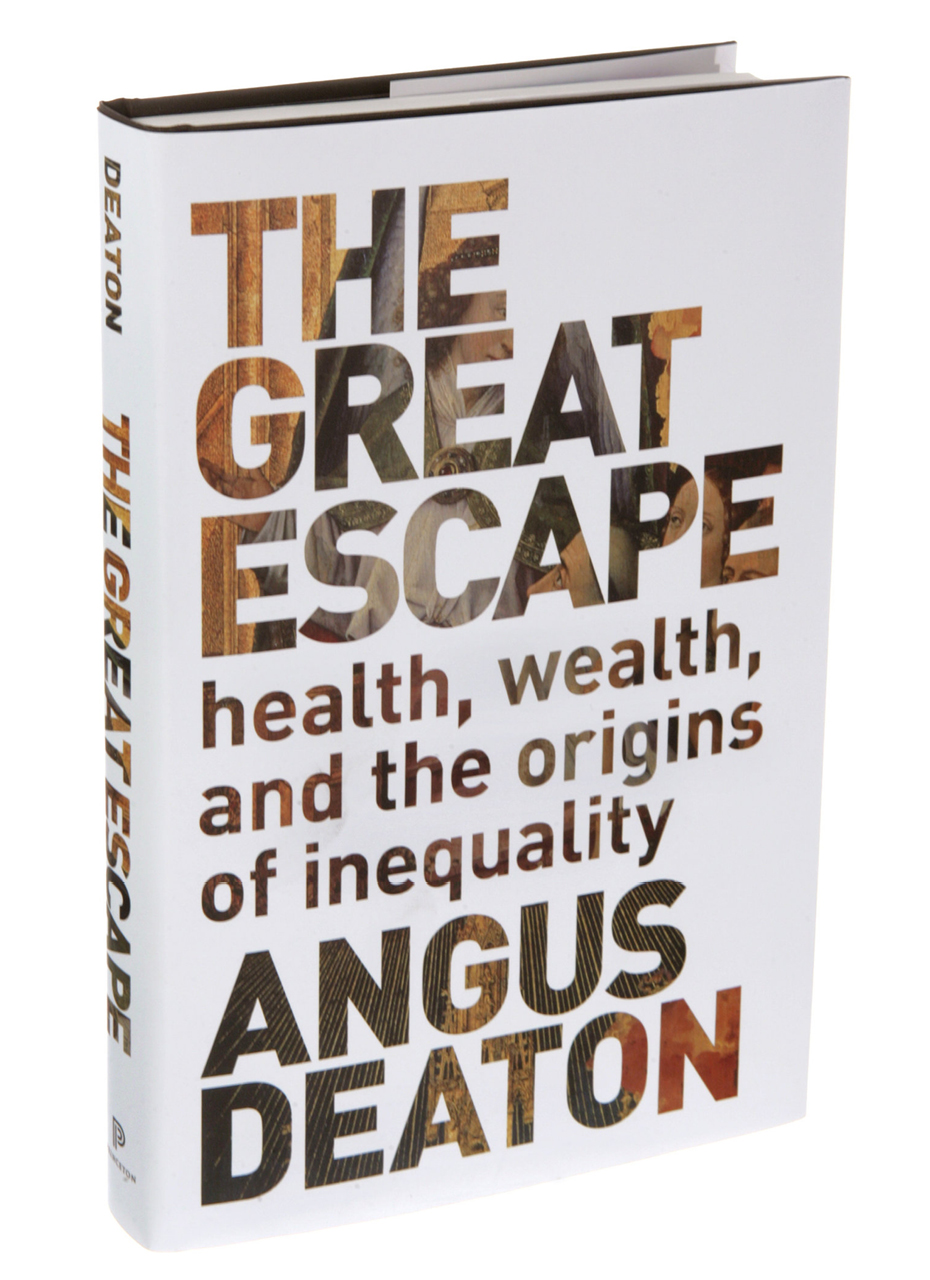
His 2013 book, "The Great Escape: Health, Wealth and the Origins of Inequality" describes how the world has become immensely healthier and wealthier over the past 250 years, but also vastly more unequal. It also argues that aid props up a broken, corrupt, and even "predatory" system.
Never a radical, Deaton has nevertheless been a consistent critic of those he holds responsible for rising economic inequalities, including members of his own profession.
In 2020 he exchanged ideas about the proper purpose of economists with the Nobel laureate Amartya Sen in a famous conversation titled "Economics with a Moral Compass" that was published in the Annual Review of Economics.
What if the economists got it wrong?
His 2023 book "Economics in America: An Immigrant Economist Explores the Land of Inequality" went further, examining the failings of economists with characteristic wit, but pulling no punches in its conclusions.
Arguing that economists should get back to serving society, Deaton declared that "The discipline has become unmoored from its proper basis, which is the study of human welfare."
A year later, Deaton set an example by announcing that he had changed his mind about much of the mainstream economics he had previously supported.
The decline of labour unions, for example, had gone too far and was "contributing to…the widening gap between executives and workers, to community destruction and to rising populism."
More controversially, he also said that he had changed his opinion on the benefits of free trade and was even sceptical "of the claim, which I and others have made in the past, that globalisation was responsible for the vast reduction of global poverty over the past 30 years."
Overall, he observed, the profession's mistakes showed that "Economists could benefit by greater engagement with the ideas of philosophers, historians and sociologists, just as {the great 18th century Scottish economist} Adam Smith once did."
Deaton is plainly proud of his Scottish roots. A US citizen since 2012, he nonetheless retains British nationality and is known in the UK as Sir Angus, thanks to a knighthood bestowed by Queen Elizabeth II in 2016.
Currently an Emeritus Professor of Economics and Public affairs at Princeton University, where he began teaching in 1983, he is effectively now retired. Yet the results of his lifetime focus on wealth and wellbeing remain more relevant than ever.
Deaton may not have fully cracked the "Does money buy happiness?" conundrum, but he has significantly deepened our understanding of the remarkably complex relationship between economics and human wellbeing.