- Home
-
India Insights and Market vault

A record-breaking handbag, a sandal from Kolhapur and an art collection that has kept its receipts for four centuries have one thing in common: someone wrote the story down. In luxury, that record is becoming part of the value.

On 10 July 2025, bidding for a black leather handbag at Sotheby's in Paris ran for more than ten minutes. When it ended, the price stood at EUR 8.58 million, about USD 10 million, the highest ever paid for a handbag at auction.
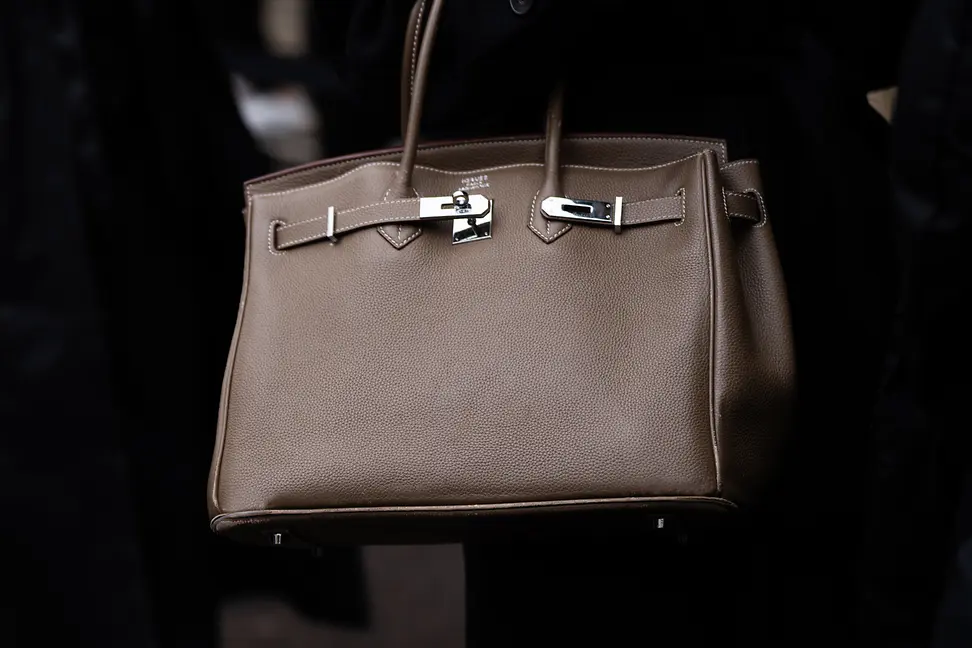
Hermès has made countless Birkins. This one was the first. Created in 1984 for the actress and singer Jane Birkin, who had sketched the bag she wanted on an air sickness bag, it carries her initials, the marks of the stickers she stuck on it and a nail clipper she kept attached. The craftsmanship can be repeated. The history cannot.
The Birkin shows that the story behind an object has two layers. The first is origin: who made it, where, and in which tradition. The second is history: who owned it, when, and what it went through. Buyers increasingly ask about both. But either layer only counts if someone has kept a record of it.
Luxury has always been built on craft. What has changed is that houses now put the makers on record. Fashion brands bring their ateliers onto the runway, watchmakers name the people who assemble their movements, and jewellers publish where their stones come from. Wine has done this for centuries: the name of a village or vineyard on the label still does much of the selling.
India has had a front-row view. In March 2023, Dior staged a show at the Gateway of India in Mumbai and put its Indian collaborators in plain sight. The 46-foot toran hanging over the runway came from the Chanakya atelier and school, where more than 300 master artisans spent 35'000 hours on it. The guests knew whose hands had made it.
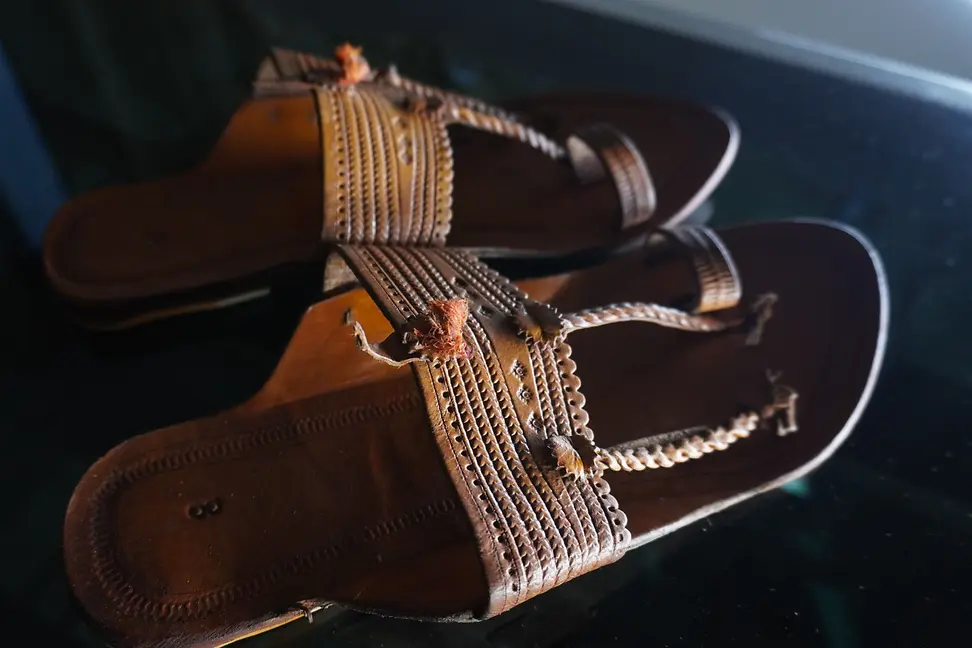
When origin is not named, the record has to do the talking. The Kolhapuri chappal, the handmade leather sandal from Maharashtra and Karnataka, has held a Geographical Indication tag since 2019. Its origin is documented and legally protected.
On 22 June 2025, Prada presented its Spring/Summer 2026 menswear in Milan. Sandals closely resembling the chappal appeared in at least seven of the 56 looks, with no reference to where the design came from. Artisans, politicians and the Maharashtra Chamber of Commerce, Industry and Agriculture, which represents some 3'000 Kolhapuri artisans, asked for credit. On 28 June, Prada acknowledged the inspiration. "We deeply recognise the cultural significance of such Indian craftsmanship," wrote Lorenzo Bertelli, the group's head of corporate social responsibility.
The acknowledgement became a partnership. A Prada delegation travelled to Kolhapur, and in December 2025 the group set up a project with two state-backed bodies, LIDCOM and LIDKAR. In April 2026, a limited-edition collection made in India by artisans from both states went on sale in 40 Prada stores and online, at around EUR 800 a pair. Prada also announced a three-year training programme for artisans from the eight districts where the chappal is traditionally made.
The public debate rightly focused on cultural appropriation. But the artisans' claim had a footing because their origin was on record. Centuries of skill became a name that could be credited, and a product that could carry it.
If origin is one half of the record, ownership is the other. The art world has the longest memory for it, and some collections keep that memory themselves. LGT is owned by the Princely Family of Liechtenstein, which has collected art for more than four hundred years. Its Princely Collections show what happens when provenance is kept rather than reconstructed.
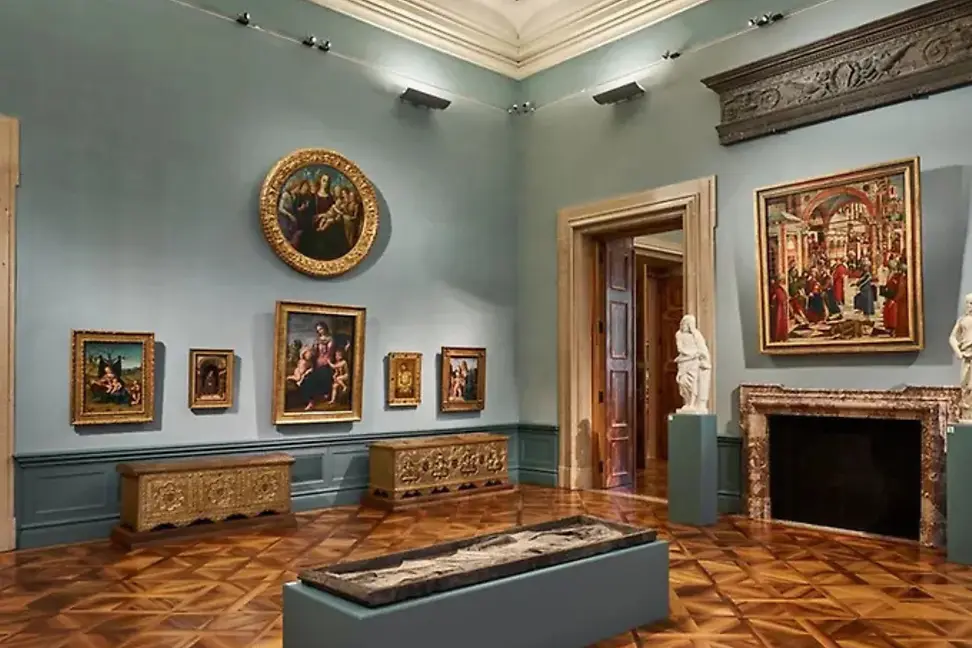
On the back of a triptych by the Flemish painter Hugo van der Goes, an inscription records that Prince Karl Eusebius bought the panel from the dealer Regnier Megan in 1684. Last winter, the Princely Collections displayed a photograph of that inscription next to the painting at the Garden Palace in Vienna. The receipt, it seemed, deserved wall space too.
The collection now numbers some 30'000 objects, and its inventories, dealer letters and sales records remain readily available. They allowed the exhibition "Dealing in Splendour: A History of the European Art Market" to show how the trade in art really worked. Among the documents was a dealer's letter offering Prince Johann Adam the Decius Mus cycle, eight canvases by Peter Paul Rubens that are still together today.
"No object of art exists without its economic context," says Stephan Koja, Director of the Princely Collections. Habits we now think of as scholarly, from the catalogue raisonné to tracing an owner's history, were first developed by dealers who wanted fewer doubts and more orderly trade. Provenance began as a tool of the market.
The family's own history shows what the record is worth. In 1967, Leonardo's "Portrait of Ginevra de' Benci" left the collection for the National Gallery of Art in Washington for USD 5 million. After becoming Prince in 1989, Hans-Adam II set about buying back many of the works that had been sold. In 2004 he acquired the Badminton Cabinet, a baroque piece made in the 1720s for the 19-year-old Duke of Beaufort, for GBP 19 million, still the auction record for a decorative art object. Knowing what was sold, to whom and when is what makes a buy-back possible.
Hereditary Prince Alois describes his role as a responsibility rooted in family history, with careful stewardship ahead of personal taste. Collecting is also, he acknowledges, a form of investment.
A record has to be kept by someone. It can be a Geographical Indication filed on behalf of thousands of artisans, an inscription on the back of a panel, an invoice left in a drawer, or a maker's name written down before the maker retires. The Kolhapuri artisans had a formal record of where their craft came from. The Princely Collections have letters going back to the seventeenth century. Jane Birkin's bag carried its history on its surface. In each case, the story could be told because someone had kept hold of it.
For a younger generation inheriting a business, a collection or a name, the questions are practical. Who made it? Where did it come from? Who owned it before? Is any of it written down? In art, the answers influence prices. In crafts and family enterprises, they decide whether a tradition can be handed on with its name attached.
The object still matters. Increasingly, so does its record, and whoever has kept it.