- Home
-
India Insights and Market vault

What should investors expect in 2026? Mika Kastenholz, LGT Global Head Investment Solutions, shares his insights on global markets, as higher structural inflation, elevated debt and potential capital controls are reshaping the landscape.
We are in a period where market conditions indeed appear stable on the surface - if we take, for example, global stock markets as the barometer. But the appearance is deceptive. Various underlying pressures can reach a tipping point. I speak of "punctuated equilibrium" in reference to evolutionary theory, where the term describes systems that appear stable for long periods. However, once underlying pressures reach a tipping point, they undergo surprisingly rapid structural shifts.
What we are seeing is indeed the end of an era: For more than a decade after the Global Financial Crisis, markets benefitted from low rates, abundant liquidity, clear political alliances and efficiency gains from globalisation. That regime has clearly ended.
The range of economic and market outcomes in 2026 is set to widen. This is happening across monetary, fiscal, geopolitical and technological dimensions - even if equity markets have not fully reflected this yet.
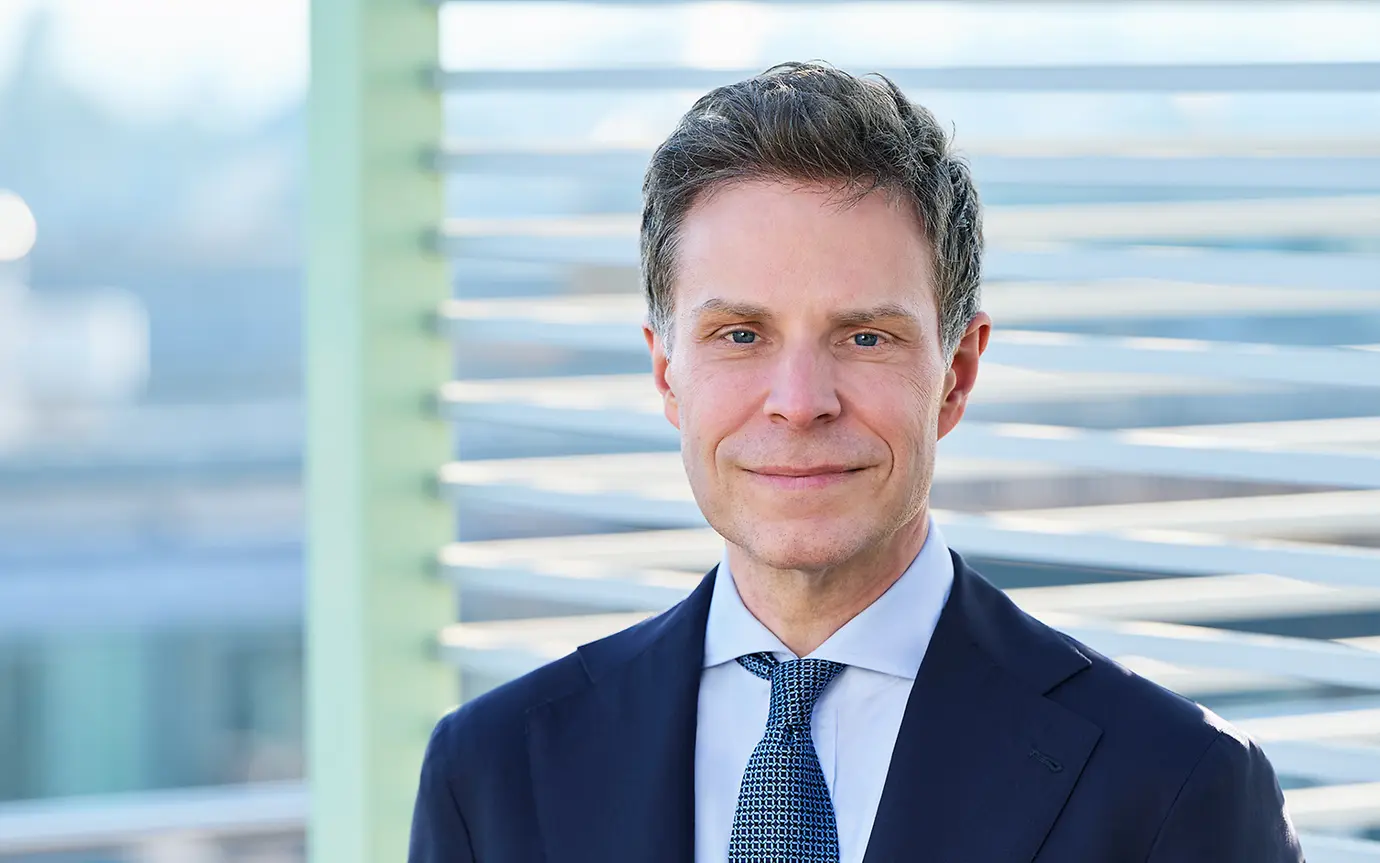
Mika Kastenholz is the Global Head Investment Solutions at LGT Private Banking. With an academic background in science and technology, Mika Kastenholz has more than 20 years' experience in capital markets, trading, and investment products including cross-asset derivatives. He is the author of a book on derivatives trading and also co-founded a fintech firm specialised in private banking and wealthtech solutions.
The three key forces around which the global economy is recalibrating are the following: higher structural inflation, elevated sovereign debt levels and potential capital controls. At the same time, supply chains are being reshaped, not by purely commercial logic, but by security concerns, national capitalism and industrial policy.
Turmoil is a strong expression. But traditional macro and political relationships are less reliable. Shocks can occur more quickly than recent history suggests.
The distribution of outcomes has widened significantly. Standard business-cycle indicators used to drive cross-asset correlations, volatility and risk premia. But this is no longer the case. They are now driven increasingly by geopolitics, policy signals, global liquidity and flow-of-funds dynamics. This means asset allocation must place even greater emphasis on scenario analysis, liquidity management and agility. The assumption that markets will always return to their previous equilibrium is becoming less reliable.
Not necessarily. Commission-free retail trading, the subsequent convolution of technology and financialisation, and steady inflows into passive vehicles have boosted a narrow segment in equity markets. But that is not guaranteed to last. At some point, price and value will realign, and that adjustment can be sudden and volatile especially when leverage through derivatives is in play.
The world remains deeply interconnected.
It clearly all begins and ends with energy, both in terms of prices and output. Beyond that, we are seeing three other thematic investment themes in 2026: First, AI infrastructure. We favour exposure to both AI enablers along the data centre value chain as short-term beneficiaries, and AI adopters in emerging areas in the longer term. Second, given political currents and rising market capitalisation, we need to pay attention to digital assets. As Bitcoin continues to gain acceptance among large institutional investors, it can become a component of diversified portfolios, although the size of positions would clearly still need to be aligned with the high price volatility of digital assets. Third, water scarcity. Freshwater supplies are increasingly stressed as global demand rises, while accessible resources remain limited.
The canonical form of past globalisation - such as strict offshoring - is indeed fading, but the world remains deeply interconnected. Economic blocs are becoming more distinct, yet capital, technology, geopolitics and risk continue to move across borders - often with greater speed and less predictability than before. Understanding these crosscurrents is essential for informed decision-making.
LGT Wealth India is designed for exactly this kind of world. Our global investment solutions platform, long-term ownership and thinking as well as cross-jurisdictional reach give us the analytical depth, aligned interests and operational capacity required to help clients position for a transitioning global world order. In times of accelerating uncertainty, disciplined analysis and a genuinely global perspective are not optional - they are essential. And that is the value we are committed to providing.